
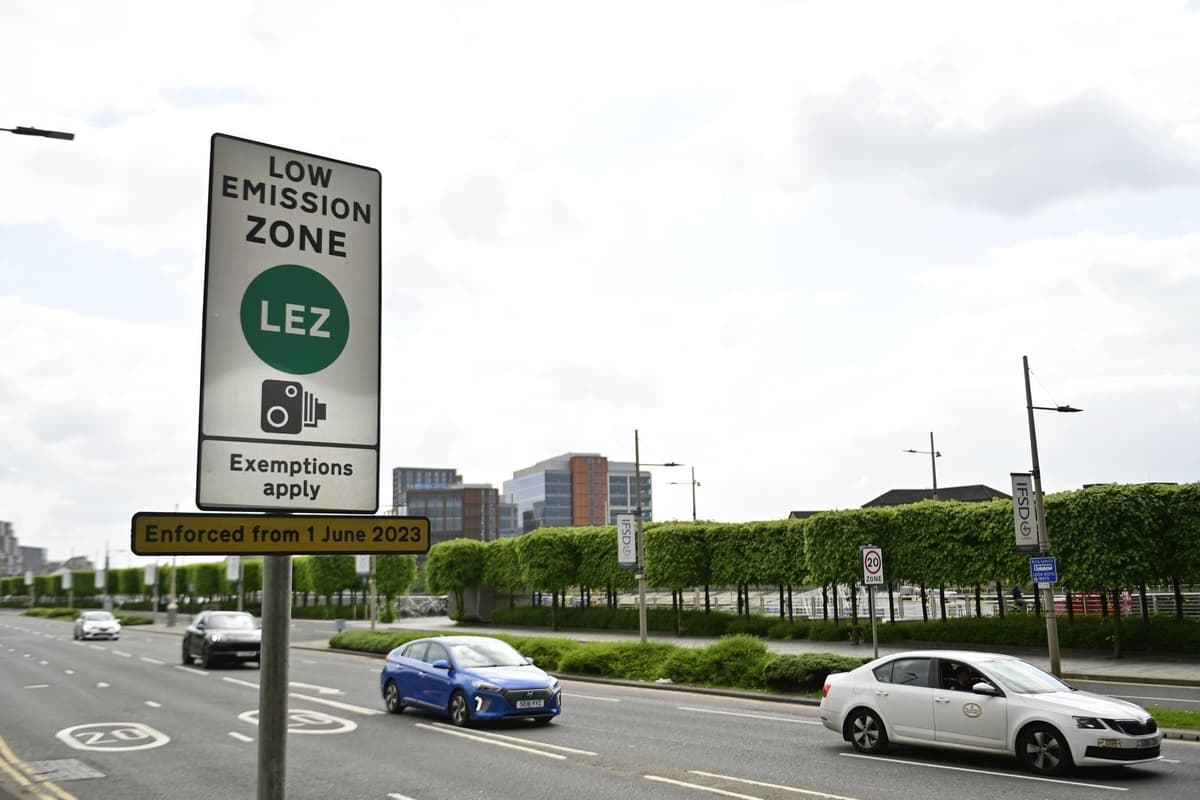

Glasgow’s Low Emission Zone: Transforming Air Quality with Smart Enforcement
Glasgow’s LEZ proves that clear targets and cutting-edge enforcement deliver. With air pollution down by a third and healthier journeys for all, the city stands as a model for urban centres everywhere.

34%
Reduction in air pollution

21%
Decrease in Nitrogen Dioxide level inside the LEZ

£1 million
In fines , with 747,000+ reinvested in clean air and greening projects.
Background
Glasgow’s Low Emission Zone (LEZ), launched in June 2023, set bold new standards for city centre air quality, banning vehicles that fail to meet strict emissions targets. The goal? Slash nitrogen dioxide (NO₂) and protect public health in one of Scotland’s busiest urban centres.
Challenge
Glasgow needed to balance tough environmental action with business and commuter needs. Despite low car ownership rates, air pollution drove hospital admissions and far exceeded WHO guidelines. Local businesses and taxi firms worried about access and upgrade costs, while health data showed excessively high pollution risks
Solution
Partnering with VidAlert and Marston Holdings, Glasgow deployed a network of CCTV and ANPR cameras at every LEZ entry point to enable fully automated enforcement. The system identifies non-compliant vehicles in real time and automatically issues penalties, eliminating the need for manual monitoring. This ensures fast, consistent, and scalable enforcement while providing the flexibility to adapt to future changes in LEZ regulations and boundaries.
Outcomes
Glasgow’s Low Emission Zone has shown how targeted enforcement can drive long-term environmental and public health improvements. Since implementation, air pollution has fallen by 34%, while NO₂ levels have reduced by 21%, contributing to cleaner air both within and beyond the zone. These improvements have enabled Glasgow to meet all legal air quality objectives for the first time in more than three decades, highlighting the role that intelligent enforcement can play in supporting healthier, more sustainable urban environments.
Alongside its environmental impact, the scheme has generated £1 million in enforcement revenue, with more than £747,000 reinvested into clean air initiatives, greening projects and sustainable transport improvements. The result is a self-sustaining approach that not only drives compliance but also delivers lasting benefits for residents, businesses and the wider city, demonstrating how enforcement can become a strategic tool for achieving broader environmental and transport objectives.
Download this case study
Complete the form below to access the full case study.